
The Wisdom Mindset of Solomon
Not long ago, I sat with a man whose life had crumbled in front of him, a once-thriving businessman with all the signs of success: big house, cars, influence. But […]
 play_arrow
How to build wealth without falling into the trap of greed Davidson
play_arrow play_arrowFinancing Options Every Real Estate Investor Should Know Davidson
play_arrowExecution Mindset: The Key Difference Between Dreamers and Builders Davidson
play_arrowThe Diligence Blueprint: 6 Biblical Pillars for Success Davidson
play_arrowThe Best Real Estate Strategy: Single-Family or Multi-Family? Davidson
play_arrowExecution Mindset: The Key Difference Between Dreamers and Builders Davidson
play_arrowWhat the Bible Really Says About Debt: Wisdom, Warnings & Strategy Davidson
 play_arrow
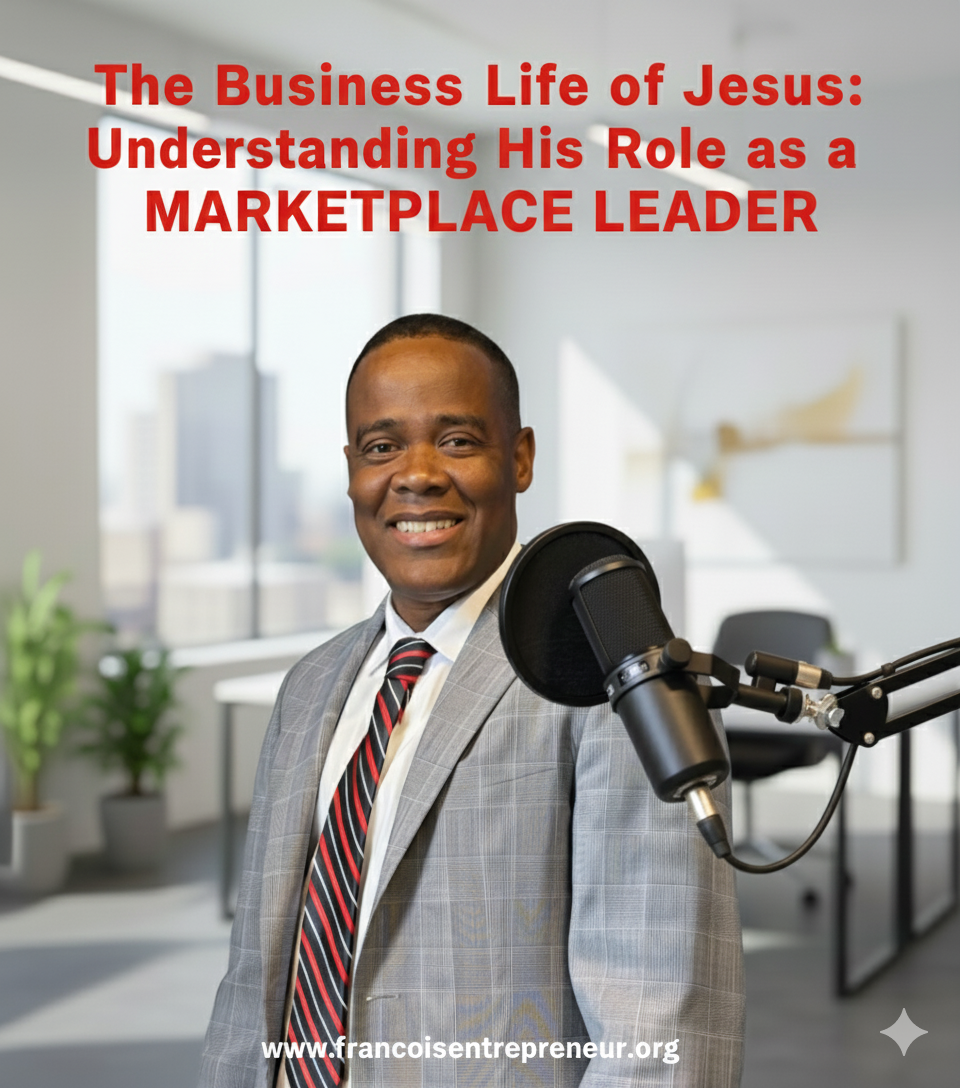
The Business Life of Jesus: Understanding His Role as a Marketplace Leader. Davidson
Now, let me ask you a question. When you think of the greatest leader who ever lived, who comes to mind? For many, it’s Jesus Christ. But forget, for a moment, the stained-glass images. Think about the businessman.
The first segment dives into his early life. The biblical narrative is clear: Jesus was a carpenter’s son, and he was a carpenter himself. This wasn’t just a brief hobby; this was his life.
In the book of Mark, when Jesus returned to his hometown of Nazareth to preach, the skeptics didn’t say, “Isn’t this the rabbi?” They said, “Isn’t this the carpenter? Isn’t this Mary’s son?” This was their primary frame of reference.
Now, the Greek word used for ‘carpenter’ – tekton – actually implies a much broader role than just woodworking. We’re talking about a builder, a contractor, someone involved in construction. Think about the skills required for this business:
These weren’t just spiritual lessons; these were transferable business skills. His time as a craftsman gave him a deep, practical understanding of human nature and the complexities of the working world. For you, the entrepreneur, this means: Never outsource the core understanding of your product or service. That hands-on experience is your foundation.
The second point is crucial for defining where you should deploy your message. Look at where Jesus spent his time during his ministry. Of the 130 appearances he made in the New Testament, an astounding 122 were in workplace settings. He wasn’t just staying in the temple or the synagogue; he was in the markets, the fields, the homes in the marketplace.
This is why his parables were so incredibly effective.
Out of 52 parables, 45 are workplace-related!
He used everyday economic activities to communicate the deepest spiritual truths. Why? Because the audience already understood the context.
As a leader, you can’t live in an ivory tower. You must take your message to where your customers and your employees are. You have to speak their language, the language of the ‘marketplace.’ Jesus’s strategy fostered an inclusivity that traditional institutions couldn’t match. He connected with people because he embodied a familiarity with business life.
Now, let’s talk about talent acquisition, our third key segment. Think about how Jesus built his core team, his 12 disciples.
Did he choose them from the religious elite? The high-ranking priests or the scholars of the day? Absolutely not.
He selected individuals deeply entrenched in the business world:
This was an incredibly diverse and unconventional team. It sends a clear message to every entrepreneur listening: Value practical, real-world experience and diverse skill sets over formal, theoretical education.
His disciples’ diverse backgrounds were the engine that drove the early Christian movement. They could navigate social, political, and economic complexities precisely because they were already seasoned in the complexities of the world. What skills are you overlooking in your own hiring process?
To wrap up the core content, let’s distill these observations into four actionable lessons for your business today:
Effective Communication: As a tekton, he learned to communicate effectively with different clients and stakeholders, which translated into his crystal-clear teachings. Simplify your message. Make complex concepts accessible and relatable.

From teaching history to analyzing market trends, my journey has been about unlocking the principles of success. I've always been driven by the idea of empowering others, whether it was in a classroom or a boardroom. On this podcast, we're going to bridge the gap between ancient wisdom and modern strategy. We’ll explore the biblical principles of stewardship, the spirit of entrepreneurship, and the proven power of real estate to create a legacy of wealth. This isn't just about making money—it's about building a future of purpose and financial freedom. Join me, and let's turn your faith into action and your vision into reality.

Not long ago, I sat with a man whose life had crumbled in front of him, a once-thriving businessman with all the signs of success: big house, cars, influence. But […]

Post comments (0)