


• Home
  • keyboard_arrow_right Entrepreneurship
  • keyboard_arrow_rightPodcasts
  • keyboard_arrow_right The Gospel’s Perspective on Earthly Possessions: A Study of the Dishonest Manager (Luke 16).
play_arrow

Entrepreneurship

The Gospel’s Perspective on Earthly Possessions: A Study of the Dishonest Manager (Luke 16).

Davidson November 24, 2025


Background
share close

The parable provides three critical insights into a spiritual view of money, which I call the three “T’s.” This is where we shift our financial thinking from a purely transactional model to a strategic, spiritual one. Money as a Tool, Money as a Test, and Money as a Testimony

This isn’t just a bible study; it’s a masterclass in eternal strategy. We’re going to use this controversial story to answer a critical question: If secular entrepreneurs can be so shrewd in securing their temporary, earthly future, how much more strategic should you be about your eternal future? https://francoisentrepreneur.org

https://francoisentrepreneur.org

The story of the dishonest manager, found in Luke chapter 16 verse 1. It’s a challenging text that forces us to re-examine how we view our resources, our time, and ultimately, our eternal future.

Jesus told his disciples there was a wealthy man, the accused manager, and the manager’s action of cleverly manipulating the ledgers to reduce his master’s clients’ debts.

The manager essentially traded his master’s current wealth for future favors with a social security system for his looming unemployment. Now, here’s the shocking pivot in verse eight: “The master commended the dishonest manager because he had acted shrewdly.”

Wait a minute shrewdly, not honestly. Jesus isn’t endorsing corruption; he’s drawing a contrast. He explains: “For the people of this world are more shrewd in dealing with their own kind than are the people of the light.”

The dishonest manager saw a limited window of opportunity and leveraged temporary assets to secure his future. The entrepreneurial lesson is simple: Strategy beats complacency. If people are that intentional about a 40-year financial plan, how much more strategic should we, the “people of the light,” be about an eternal one? That’s the first mind shift.

The parable provides three critical insights into a spiritual view of money, which I call the three “T’s.” We’re shifting our financial thinking from a purely transactional model to a strategic, spiritual one.

Jesus tells us: “Use worldly wealth to gain friends for yourselves, so that when it is gone, you will be welcomed into eternal dwellings.”

This is the key. God wants us to see our worldly wealth, our “stuff,” our portfolios not as ends in themselves, but as tools to be leveraged for eternal impact. Think of your spending as a strategic deployment. Every dollar is a choice. Are you using it merely for consumption that vanishes, or are you deploying it as a strategic tool to build the Kingdom of God?

Imagine a conversation in the future: someone thanks you because your investment helped fund a critical mission, or your generosity made a life-changing outreach possible. That is the essence of converting temporary worldly wealth into eternal relational riches. It’s the ultimate Return On Investment.

Next, Jesus offers a powerful challenge in verses ten and eleven: “Whoever can be trusted with very little can also be trusted with much… So if you have not been trustworthy in handling worldly wealth, who will trust you with true riches?”

Our worldly wealth is the “very little” temporary assignment. God is evaluating our faithfulness with these small, fleeting resources to determine if we can be trusted with the “true riches” of eternity. The actual amount is irrelevant. Whether you manage a small budget or a multinational corporation, you are being tested on your faithfulness as a steward.

If we view our finances as a test, it profoundly changes our decision-making. We move from thinking, “How can I maximize my personal consumption?” to “How can I be the best possible steward of this resource that is ultimately not mine?” It takes the pressure off accumulation and puts the focus squarely on administration.

Finally, Jesus delivers the ultimate dividing line in verse 13: “You cannot serve both God and money.”

Your financial life is the third “T”: Money as a Testimony.

Money is not a neutral asset; it is a rival master. It demands our trust, our time, and our ultimate affection. While we can use money, we cannot serve it and God simultaneously. Your bank statement is a moral document. It is the clearest record of your loyalties.

When you review your spending habits, what story does it tell? Does your financial testimony declare that you are trusting God for your future, or does it scream that you are serving the cultural gods of endless consumption and accumulation? This isn’t about being poor; it’s about alignment. It’s about ensuring that your financial compass is pointing toward your eternal destination. When you align your money with your spiritual convictions, you move from anxiety to peace.

The religious leaders of Jesus’s day, the Pharisees, sneered at this teaching because it challenged their deepest loyalty, their love of money. And honestly, it challenges ours too.

But here is the liberation: when you stop seeing money primarily for consumption and start seeing it as a tool for eternal leverage, as a Test of your faithfulness, and as a Testimony of your loyalties, the cycle of financial discontent breaks. The endless pursuit of “more” gives way to the peace of strategic giving and strategic living.

Jesus’s parable is a call to shrewd spirituality. Be as intentional, as strategic, and as forward-looking in your spiritual investments as the best entrepreneurs are in their financial ones. The question for every listener is: Are you leveraging your time and your temporary wealth to prepare for the ultimate “soft landing” not just on earth, but into eternal blessings?

Thank you for joining me on the François Entrepreneur . If this episode challenged your thinking and motivated you to re-evaluate your financial strategy, then I have two things for you to do right now.

First: Don’t let this insight stop here. Take one of the “three T’s”—Tool, Test, or Testimony—and write down one actionable step you can take this week to align your money with your eternal goals.

Second, and most important: If you want more content that builds wealth with purpose and depth, you need to be following this podcast. Hit that subscribe button right now. Subscribing is your commitment to building a legacy that lasts. Subscribe, share this with one fellow entrepreneur who needs to hear this, and join us next week as we continue our “Biblical Wealth Builder series.”

Until then, be fruitful, be faithful, and use your wealth wisely.

Rate it
Author

Davidson

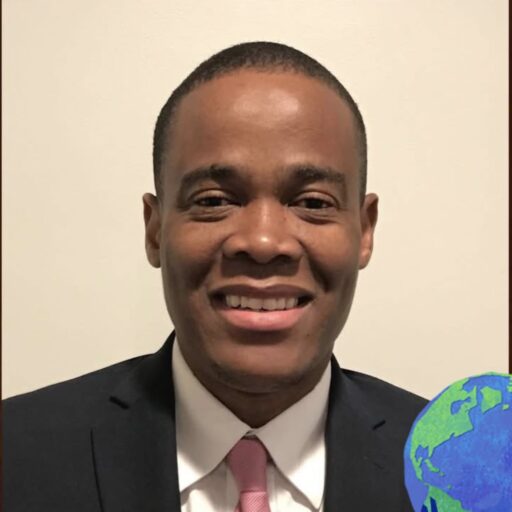
From teaching history to analyzing market trends, my journey has been about unlocking the principles of success. I've always been driven by the idea of empowering others, whether it was in a classroom or a boardroom. On this podcast, we're going to bridge the gap between ancient wisdom and modern strategy. We’ll explore the biblical principles of stewardship, the spirit of entrepreneurship, and the proven power of real estate to create a legacy of wealth. This isn't just about making money—it's about building a future of purpose and financial freedom. Join me, and let's turn your faith into action and your vision into reality.

list Archive

Background
Previous episode
Post comments (0)

Leave a reply